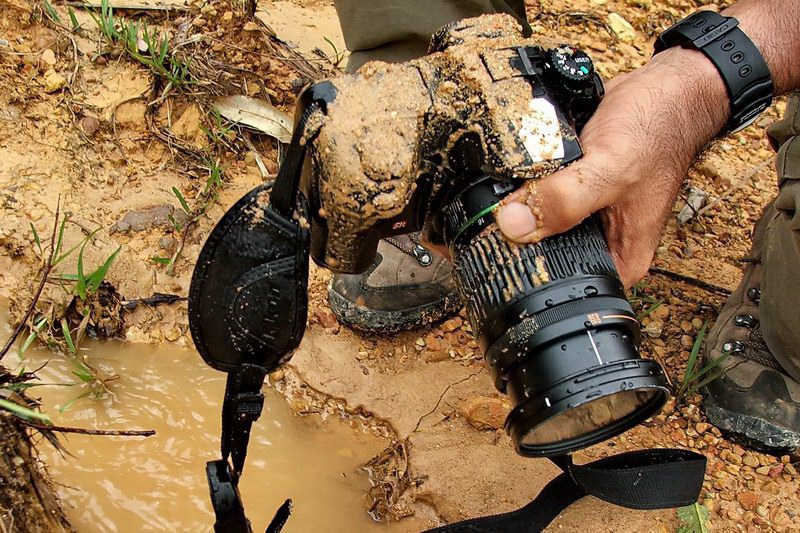
A while ago I went to Vietnam with a DSLR with
an ultra wide angle zoom and a standard 18 – 55 mm kit lens. This time, weight
was an issue and I couldn’t justify the bulk of a 5D mark II plus a 16 – 35 and
another prime... Moreover it’s just a pain having to be constantly careful not damaging
it while dropping your rucksack on the ground, or any similar situation.
 |
| Beautiful light scenes in the valleys |
With me
- Minolta X-300
- Roccor MC 58 mm f/1.4
- Vivitar 28 mm f/2.8
- 2 x 36 Superia 200
- Canon S110 (+ 2 batt)
What should
have taken with me?
- a 20 mm lens
- a small tripod/Gorillapod-style
Why film?
As hiking
isn’t in a fast changing environment like cities and as I’m shooting still more
film, I decided to take a “cheap” film SLR with one or two lenses: a Minolta
X-300, a 28 mm f/2.8, a 58 mm f/1.4 and two rolls of Superia 200 (36 exp). I
bought a second-hand Canon S110 (the pocketable successor of my now-sold G12)
to complement the SLR for times where the SLR doesn’t come handy and for
movies. Unfortunately, the parcel arrived the moment when I stepped into the
plane, too bad. Luckily, two of the three other persons hiking with me had
their own so it wasn’t such an issue.
 |
| In mid september, rivers are at low levels enabling easy water crossings |
Our trip
was a fraction of the “King’s Trail” in Sweden, Northern Läpland or Kungsleden.
It goes from Abisko to Nikkaluokta, North to South (this detail will have its
importanceas I had the sun constantly in front of me when hiking - ideal for walking but quite challenging when having to take pictures).
“L” hiking boots vs GoreTex lenses
Just for
those who are interested in doing the same trail, be sure you have the right
equipment as Abisko is located above the Arctic circle and temperatures can
drop rapidly with overcast days and/or when the sun is blocked by the
surrounding mountains. Hikers will agree, walking with wet feet and being cold is
the least ideal situation so don’t hesitate to invest in adequate gear: hiking
boots, wind blocking vest, adapted fleece (drop the cash on Polartec fleece, it’s
worth every penny), a rucksack with a harness capable of distributing heavy
loads on your hips, … Sweden has a long history of designing adapted outdoor
gear (Fjallräven is the most famous brand); you can find many shops in
Stockholm, like Naturkompaniet, which are gold mines for every hiker looking
for appropriate gear.
 |
| This part of Sweden is so isolated that you can encounter many mooses and get very close without scaring them |
As for
photography equipment, you get what you pay for; with heavy use, an L-lens will
take years of abuse and still be working while a cheap kit lens will just fall
apart. So don’t rely on cheap, unreliable hiking equipment (unless proven
otherwise) as your comfort, and sometimes your physical integrity depends on
it. If your harness or one of your shoes breaks in the middle of nowhere with a
4-day bad weather forecast in uninhabited territory, you’ll be desperate trying
to fix it (granted that it’s still possible of course).
 |
| Minolta X-300 with the described lenses, 28 mm f/2.8, 58 mm f/1.4 and a roll of Superia 20 |
The experience, the lessons
As the
landscapes are beautiful in these regions, I should have taken a wider lens
than 28 mm; I knew it but I just couldn’t get one in due time without having to
pay an amount beyond my expectations. Twenty eight millimeters is just too short
for these landscapes. I didn’t felt the need for a longer lens than the 58 mm.
The second item that I should have taken was a small tripod as Northern lights
can show up (and they did), even in mid September. I managed to make some “handheld-on-a-branch-without-breathing-during-30-seconds”
shots but it remains quite challenging though. But hikers will also know that
every 100 g saved is either more food that you can take or less weight to carry
throughout the trip, so I ditched the tripod to lighten my backpack.
 |
| Northern lights are in fact less bright than depicted on this picture, but the dynamic character isn't rendered at it's best |
The cool
fact with this analog setup is that 1) it’s ultra cheap and robust so I didn’t
care when I threw them in my dusty backpack without lens caps (I had used the
lenses quite a bit for several years before so I was confident about their
resistance) and 2) it gives you superb (or equivalent) image quality (and
rendition) compared to digital SLR’s. And-you’re-such-an-hipster-omg-omg-omg
(smiley here).
 |
| Rohan? |
Film vs digital
Well, it’s
a personal choice. You don’t “pay” for digital shots, so you can take as much “useless”
photos as you want (we all agree that every trip needs some them, dozens in
fact)! Taking a film SLR was more for film color and rendition as well as the
pleasure of taking the time to frame, adjust and shoot accordingly. I’m on
holiday, so I relax.
 |
| A comfortable and appreciated location near Nikkaluokta |